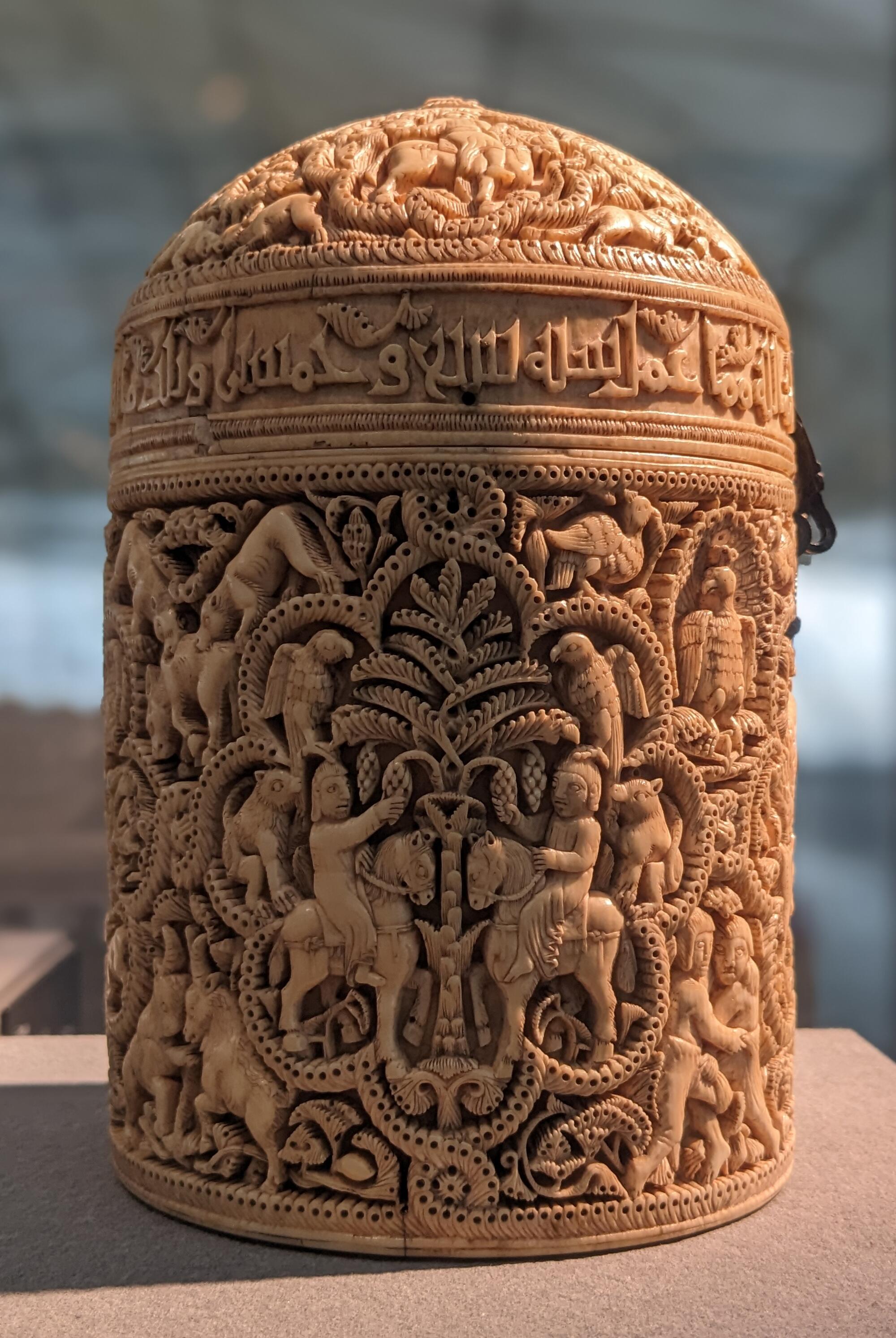
Shonagon (Wikimedia Commons), Free re-use, CC0
Pyxide on behalf of al-Mughira
- Non-identified artist(s)
968
- Musée du Louvre, Paris, France
Creator(s)
Title(s)
Date of creation
968
Materials and techniques
Ivory (elephant), carved and engraved decoration
Dimensions
Inscriptions
Place of conservation
accession_number
Acquisition details
Rights
External links
Known as the ‘al-Mughira Pyxis’, this cylindrical casket is a supreme example of tenth-century sophistication of artistic expression and craftsmanship. Preserved in the Musée du Louvre (accession number OA 4068), its inscription tells us that it was made in the year 968CE for al-Mughira (ca.950–976CE), son of the Andalusi Umayyad caliph Abd al-Rahman III (r.912–961). A deeper look into its patronage reveals that it may have been commissioned by his mother, a powerful woman in the court, offering a rare glimpse into female artistic agency and family relationships from the period.