Artwork
The Garden of Earthly Delights
Details
Linked article
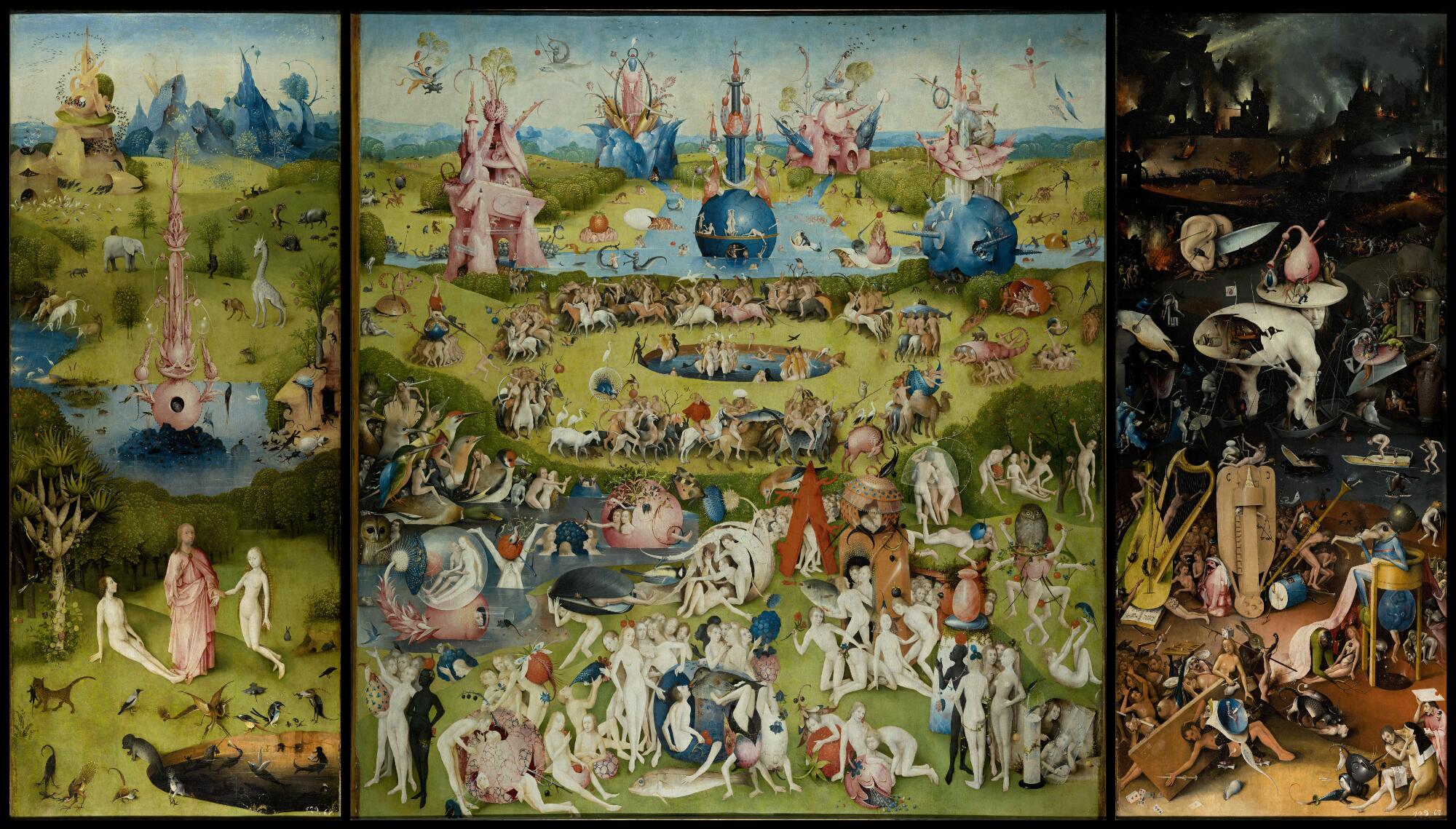
The most famous and, at the same time, most enigmatic work by Hieronymus Bosch (c. 1450–1515) is the triptych that was only given the title Garden of Earthly Delights centuries after its creation, based on the intriguing scene depicted on the central panel. In 1517, it was housed in the palace of Count Henry III of Nassau-Breda on the Coudenberg in Brussels, as Antonio de Beatis noted in the travel journal of the Italian cardinal Luigi d’Aragona. Through inheritance, the triptych came into the possession of Henry III’s son, René of Chalon, in 1538, and in 1544 it became the property of his nephew, Prince William of Orange. The possessions of William of Orange, who led the revolt against the Spanish King Philip II, were confiscated on 20 January 1568 by Fernando Álvarez de Toledo y Pimentel, the Duke of Alva. This general had been appointed by King Philip II of Spain as governor of the Netherlands. The triptych by Hieronymus Bosch subsequently came into the possession of Fernando (Herbando) Álvarez de Toledo, Alva’s illegitimate son. King Philip II acquired the triptych in 1591 and, in 1593, placed it in the royal apartments of the monastery, mausoleum and palace complex of El Escorial, which he had founded. Since 1939, the Garden of Earthly Delights has been housed in the Museo Nacional del Prado.