Artwork
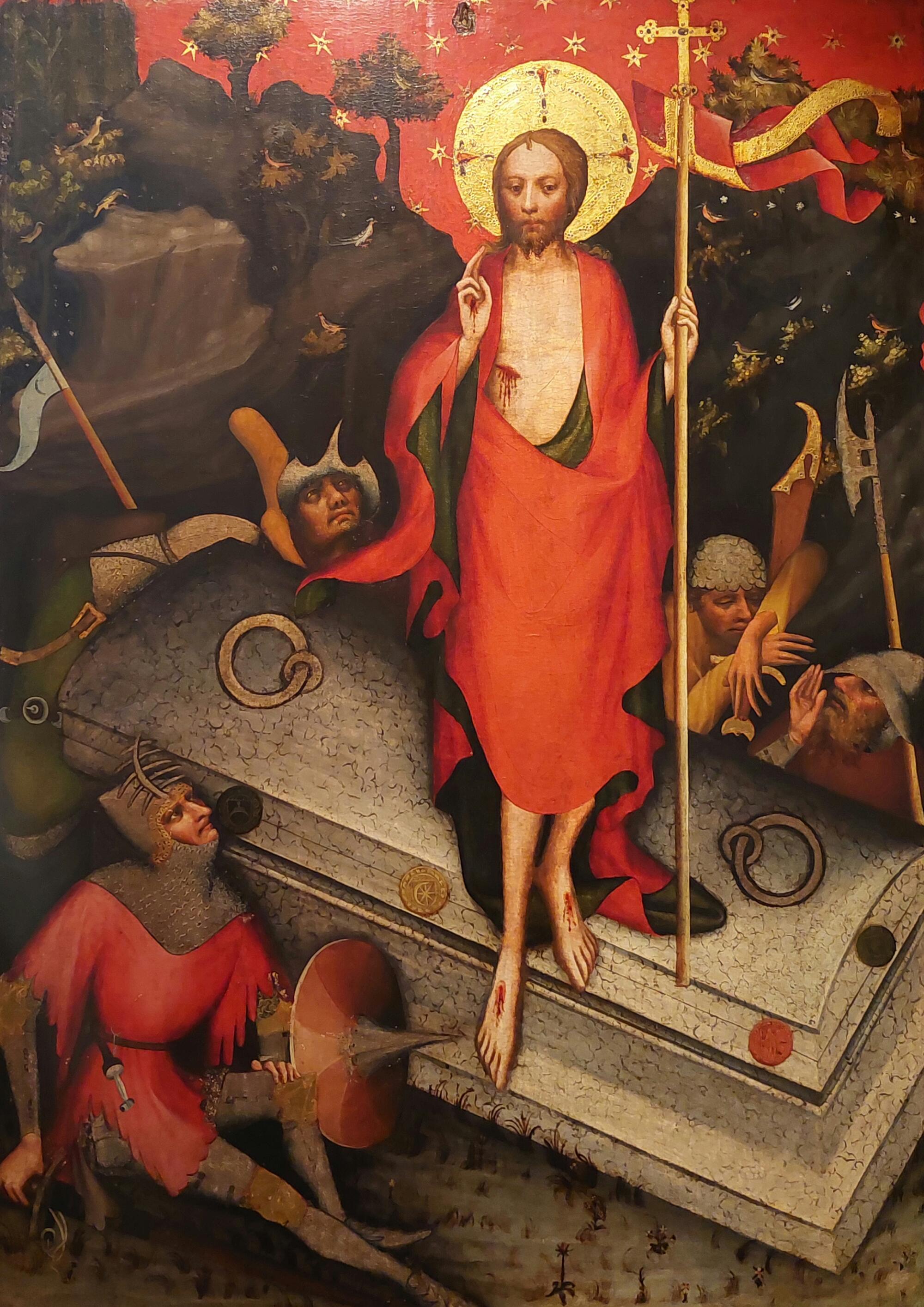
Třeboň Altarpiece – Panel with the Resurrection of Christ
Details
Linked article
When in 1378 the Czech king and Roman emperor Charles IV died, he left to his son Wenceslas the lands of the Bohemian Crown in a state of economic, political, social and cultural consolidation. Thanks to Charles’s skilful domestic and foreign policy, and a fortunate concurrence of circumstances (for example, the Czech lands had been spared the devastating plague of the mid-century as well as serious climatic fluctuations and the accompanying crop failures), a long period of relative peace had enabled the flourishing of significant architectural and artistic projects. Favourable conditions for the development of culture and art were also supported by a cooperative relationship between secular and ecclesiastical power. Prague archbishops Arnošt of Pardubice and Jan Očko of Vlašim were close collaborators and partners of Charles, especially in the building and decoration of the Prague cathedral and coronation church dedicated to the country’s patrons St. Vitus, St. Wenceslas and St. Adalbert.