Artwork
Book of Kells
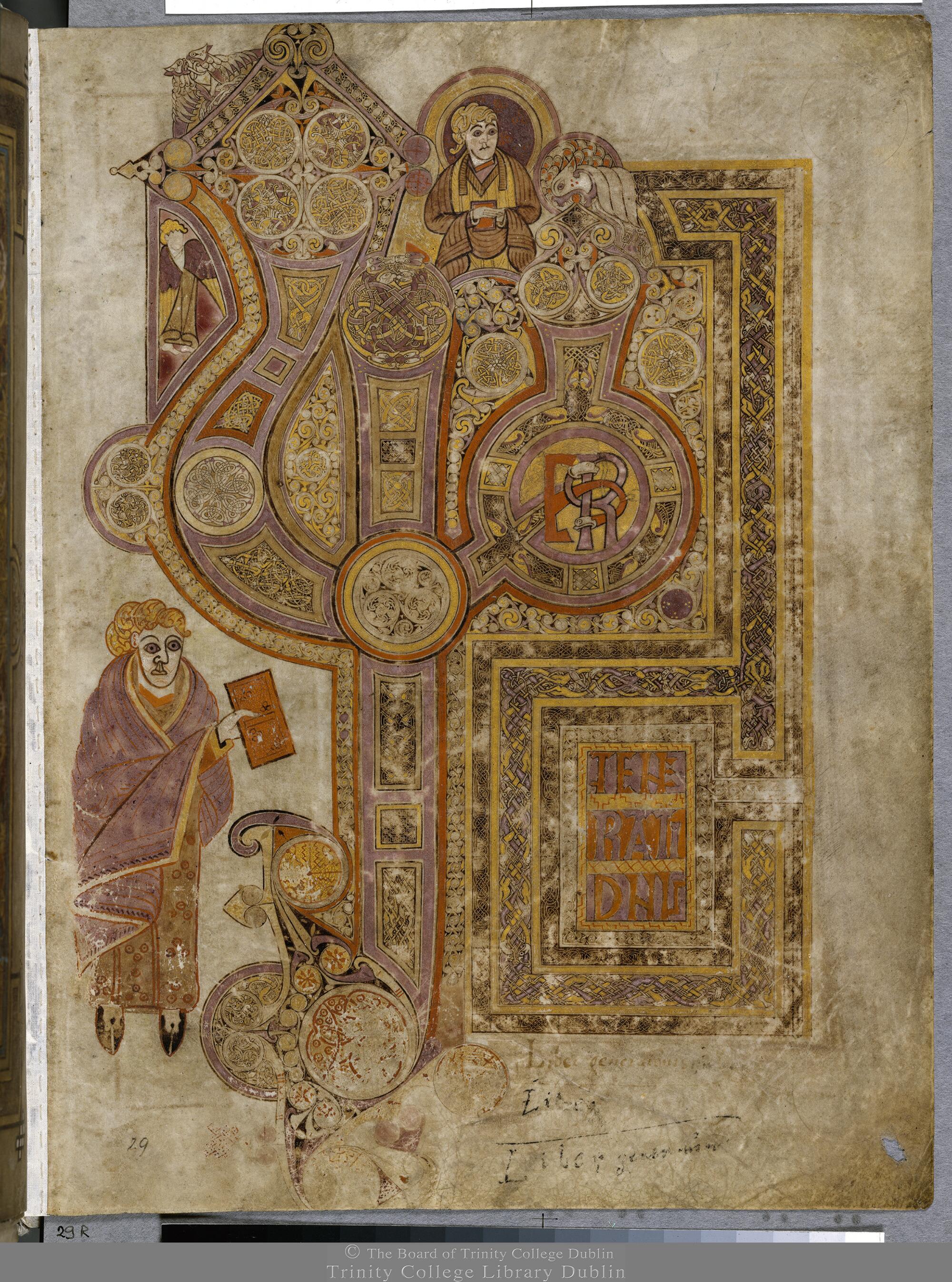
Details
Linked article
Every year, almost one million visitors make the pilgrimage to the Library of Trinity College Dublin to view the Book of Kells (Dublin, TCD MS 58). Since the late nineteenth century, it has been regarded as Ireland’s greatest cultural treasure. Its distinctive artwork has been reproduced on all manner of souvenirs as being instantly and universally recognised as ‘Irish’. In 2011 it was inscribed into the UNESCO Memory of the World Register.
The Book of Kells is a gospel book, containing the four gospels of the Christian New Testament with some prefatory texts. There is no colophon recording the patron(s), scribe(s), place of making or any other provenance.. It is one of the few precious survivals of an influential tradition of manuscript book production that flourished in the milieu of the Irish Church in the eighth and ninth centuries. This was a period during which Ireland’s fame for learning attracted scholars from across Europe, and Irish churchmen travelled across the Continent as pilgrims, teachers and evangelisers, bringing their books and scribal skills with them. Manuscripts such as the Echternach Gospels, Lindisfarne Gospels and St Gall Gospels all attest to the impact of this tradition beyond Irish shores, with their distinctive form of script and illustration that since the early twentieth century has been called ‘Insular’ (of the islands). However, it is the Book of Kells, a manuscript that has remained in Ireland for most of its existence, which illustrates the real apogee of the artistry and learning inherent in this tradition.