Artwork
The Old New Synagogue
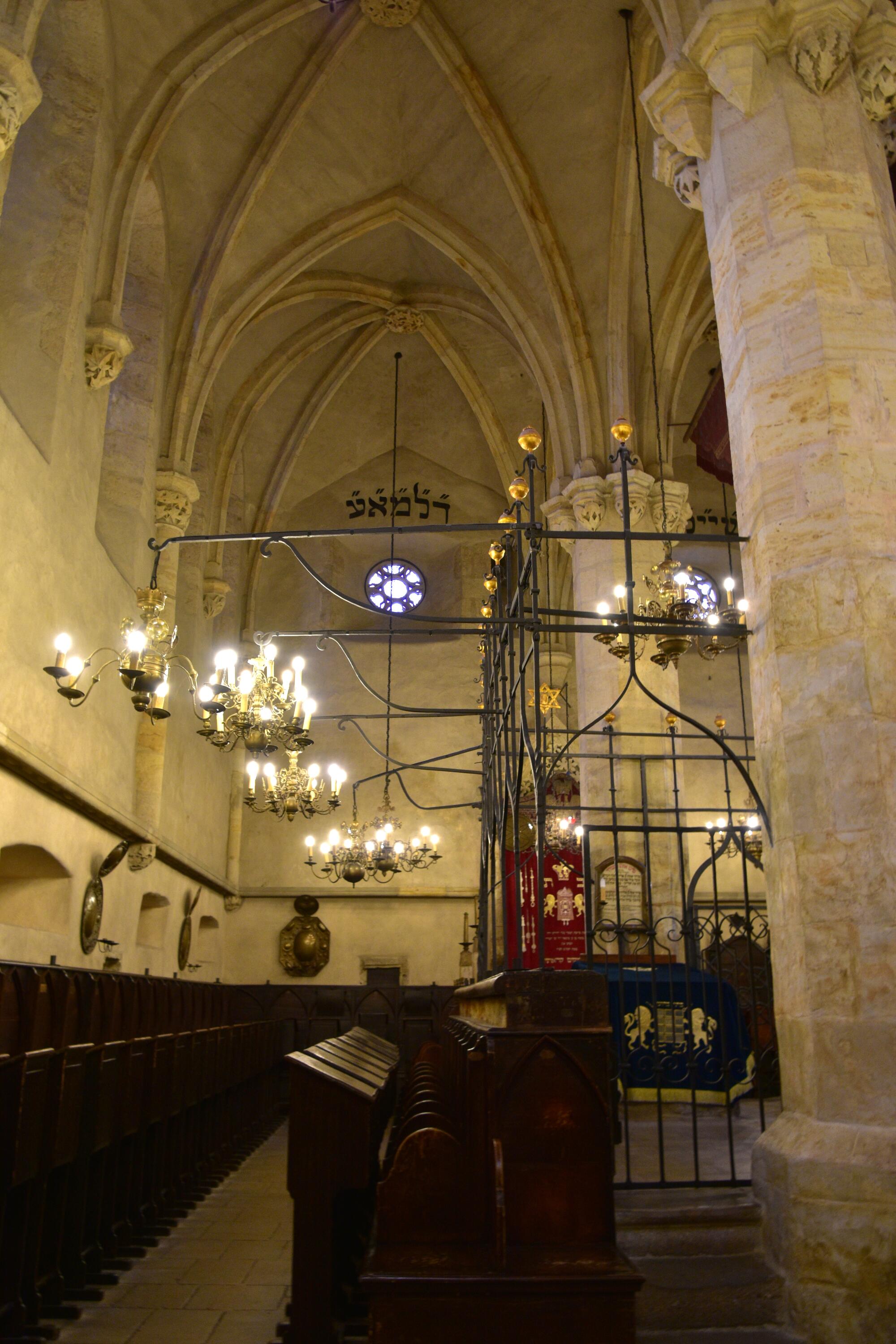
Details
Linked article
The status of the Jewish population in the Czech lands, much like in other regions of Christian Europe, was determined above all by the support provided by the ruling monarch. Royal protection constituted the fundamental precondition for Jewish survival within a Christian society. The earliest legislative act guaranteeing such protection in the Bohemian lands was the charter issued by Prince Soběslav (1174–1178), which was also intended to apply to Romance and German settlers residing in the area beneath Prague Castle near the Church of St Peter at Poříčí. References to Jewish merchants in the castle suburb, however, already appear in the travel account of Ibrahim ibn Yaʿqūb (965–966), as well as in connection with the attacks of the Crusaders during the First Crusade to the Holy Land in 1096. These references may pertain either to Jewish communities settled in the suburb beneath Prague Castle on the left bank of the Vltava, near the local marketplace along the route to the wooden bridge crossing the river, or to settlements in the vicinity of the marketplace on the right bank beneath the second Prague stronghold, Vyšehrad, established by King Vratislav II (r. 1061–1096) as a new ecclesiastical centre and a rival to Prague Castle. In 1142, during the siege of Prague by Conrad of Znojmo, a synagogue in the Prague suburb—in suburbio Pragensis—was, according to contemporary chronicles, destroyed by fire. This reference could apply to the suburb on either the left or the right bank, since during the 12th century, under King Vladislav II (crowned in 1158), Prague expanded and was transformed into a stone-built city on both banks of the Vltava, connected by the newly constructed Judith Bridge.