Artwork
Holy Savior Cathedral
Details
Linked article
In the early 17th century, Shah Abbas I of Safavid Persia forcibly relocated thousands of Armenians to Isfahan, creating the New Julfa district. Armenian merchants there built a global trade network and brought European artworks and influences to Iran, which shaped a distinctive artistic style blending Armenian, Persian, and Western traditions.
The 17th–18th centuries marked a golden age of manuscript illumination and mural painting in New Julfa, particularly in richly decorated churches. These churches combine Armenian architectural forms with Persian stylistic elements, featuring plain brick exteriors but lavishly gilded and painted interiors.
The murals – painted by masters like Minas and Hovhannes Mrkuz– integrate Old and New Testament scenes, Armenian iconography, Persian floral motifs, and strong European artistic influence. Notable works include rare depictions of St. Gregory the Illuminator’s life, dynamic biblical episodes with Western stylistic traits.
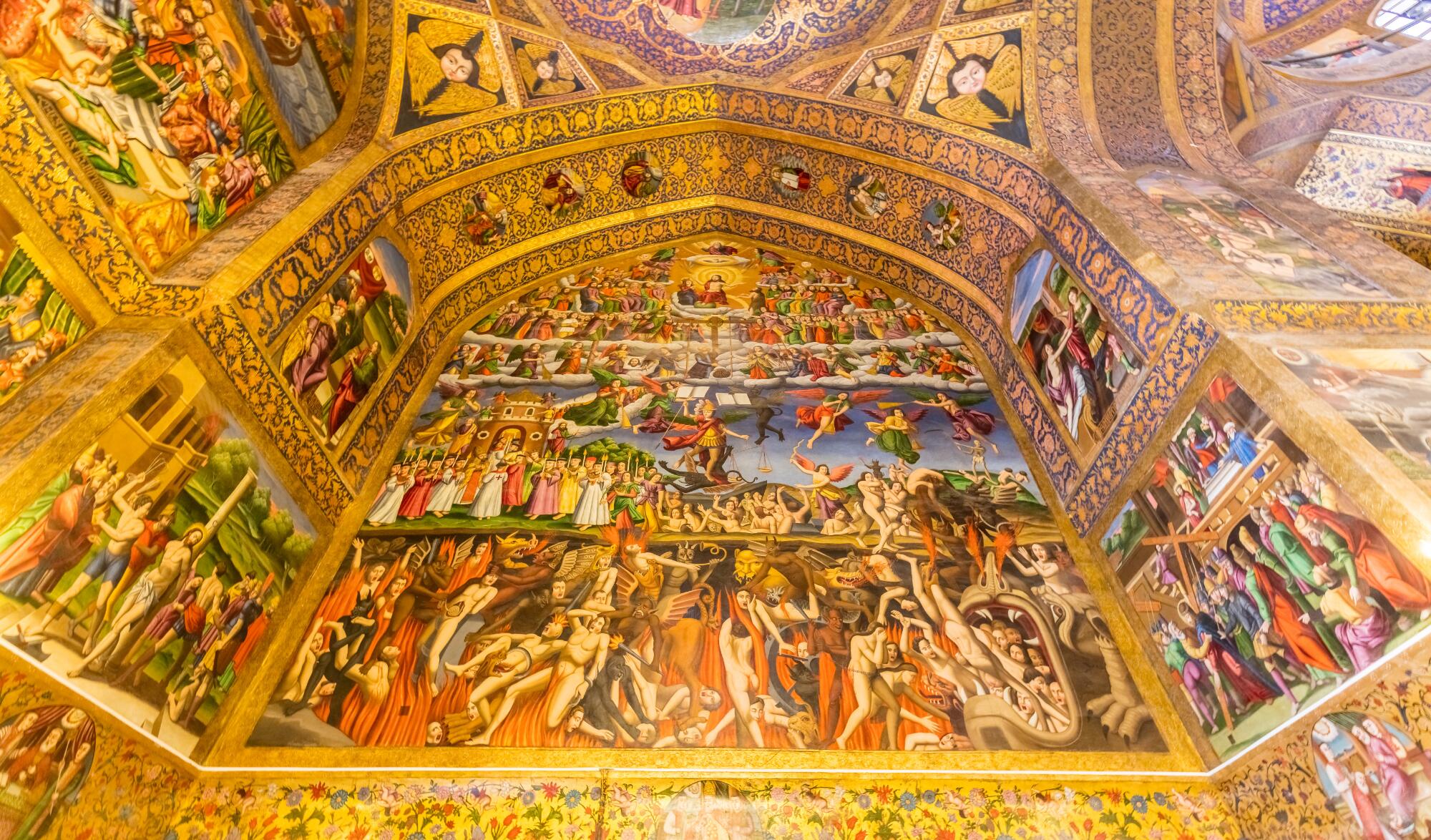
Particularly notable is the dramatic Last Judgment mural on the north wall, featuring expressive figures։ angels, demons, and symbolic imagery like the sea monster Leviathan. The Last Judgment scene was inspired from 1606 engraving by French artist Philippe Thomassin (1562 – 1622) while adding local innovations.
Throughout, the murals display large, round– eyed figures, proportional anatomy, richly patterned garments, and an emphasis on movement and gesture over facial expression.Theatrical compositions, lavish use of gold, and vibrant colors produce a gallery– like visual experience.
These works show how New Julfa’s Armenian artists absorbed European engravings– bymasters like Dutch Christoffel van Sichem and Spanish Jesuit Jerónimo Nadal–yet localized them through Armenian religious themes and Persian decorative traditions. The blend of cultural influences makes All Saviour Cathedral one of the most impressive achievements of Armenian religious art, with its austere exterior hiding a spectacular interior.