Artwork
The Knucklebones Player
Details
Linked article
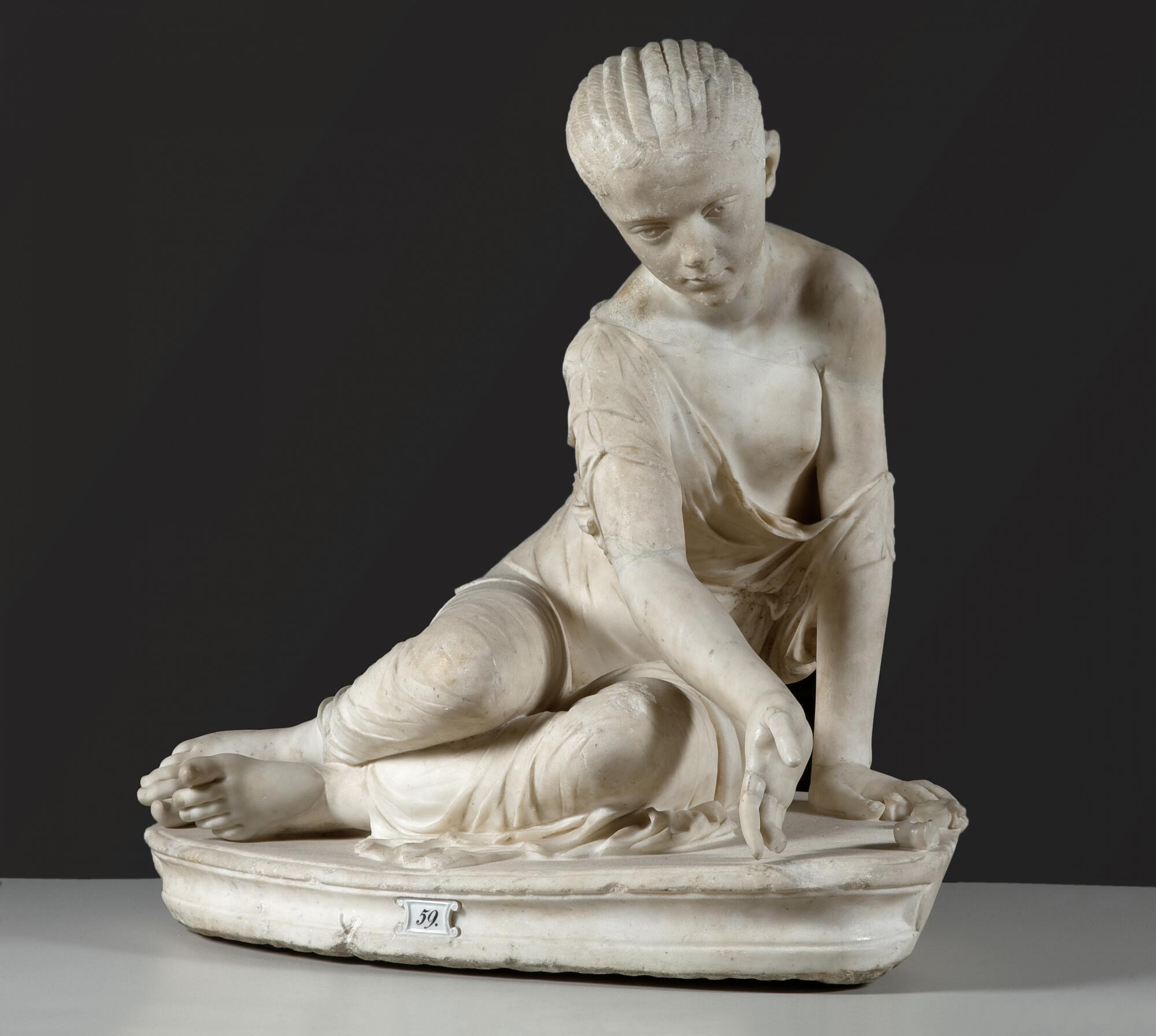
Discovered in Rome in theearly 18th century and now housed in the Antikensammlung of theStaatliche Museen in Berlin, the marble statue of Knucklebone Player fromthe 2nd century CE is one of the most celebrated depictions of thistype to survive to the present day.
The girl, portrayed as smaller than life size, sits on a plinth with herlegs folded over each other, her torso leaning forward and turned to the left.Her head is tilted slightly, her large, flat eyes gaze into void. She wears achiton with buttoned sleeves that has slipped off her left shoulder, revealingher nascent bosom. Her left arm rests on the ground, while her right arm israised. Two astragali, small tarsal bones of mammals, which are known to havebeen used as gaming pieces in antiquity (mistakenly referred to as knucklebones,i.e. joints of the fingers, in scholarly literature) are held in her left hand,while two more rest on the plinth.