NateBergin (Wikimedia Commons), Re-use in accordance with the terms and conditions of the Creative Commons licence (CC BY-SA 4.0), CC BY-SA 4.0
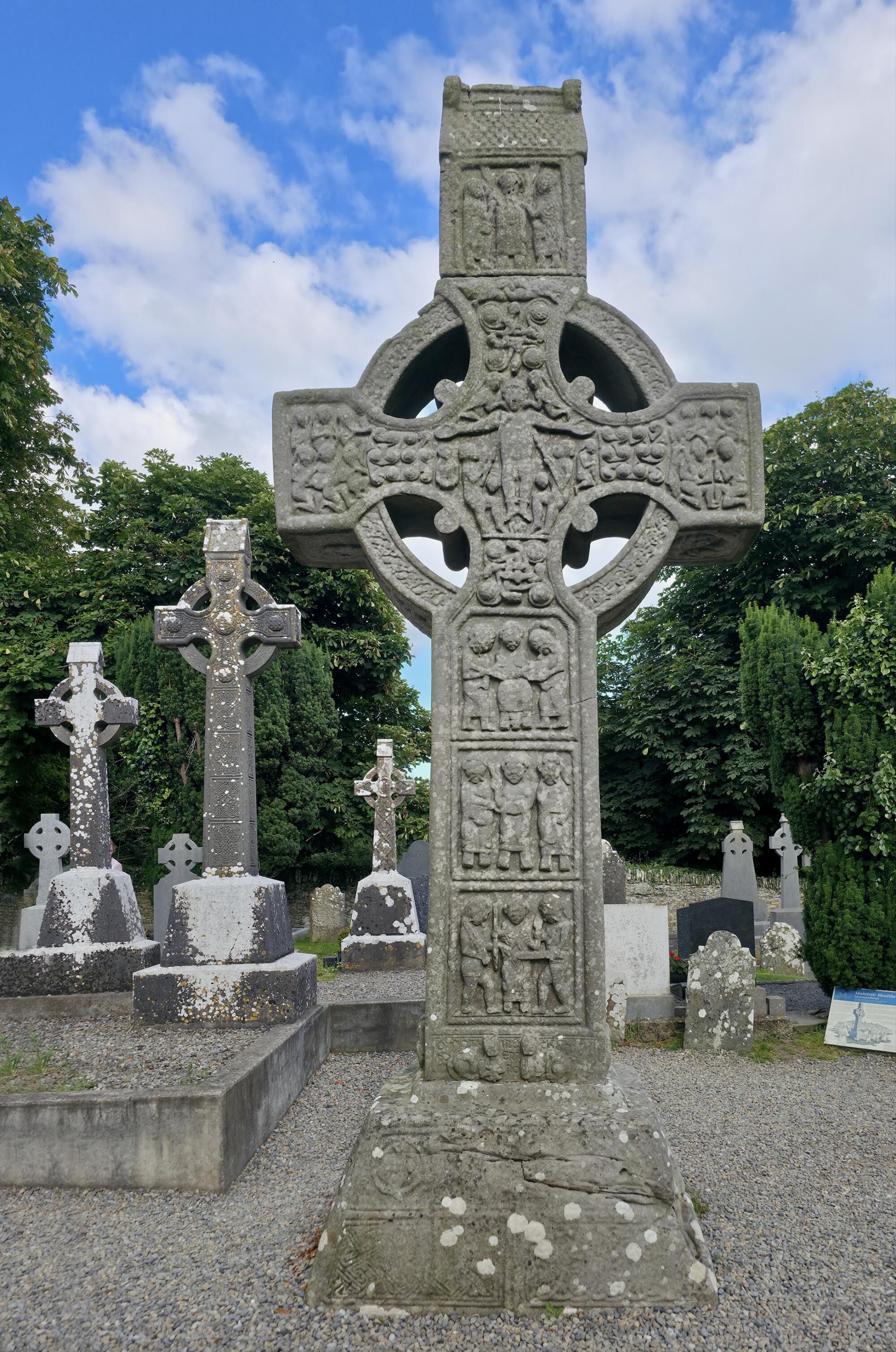
Muiredach's High Cross
- Non-identified artist
Late 8th century - early 9th century CE
- Monasterboice, County Louth, Ireland
Creator(s)
Title(s)
Date of creation
Late 8th century - early 9th century CE
Materials and techniques
Sandstone sculpture
Dimensions
Place of conservation
Rights
External links
‘Celtic’ or more correctly ‘high’ crosses are one of the most evocative symbols of the early medieval period in Ireland. Created in the form of a Latin cross, intersected by a ring, their distinctive silhouette has become synonymous with Irish, and to a lesser degree Scottish, identity since the revival of the form in funerary and monumental sculpture from the mid-nineteenth century. Roughly 250 of these monuments, intact and fragmented, survive across Ireland. Of these, Muiredach’s cross at Monasterboice in Co. Louth is one of the most substantial and best-preserved examples. As such, it is also one of the best-known, and while still in its original location, in a quiet rural graveyard, copies of it are held in in numerous international museum collections.