József Sisa, courtesy of the photographer, All rights reserved, Please ask the photographer for permission before re-using the image
Creator(s)
Title(s)
Date of creation
1893-1896
Place of conservation
Rights
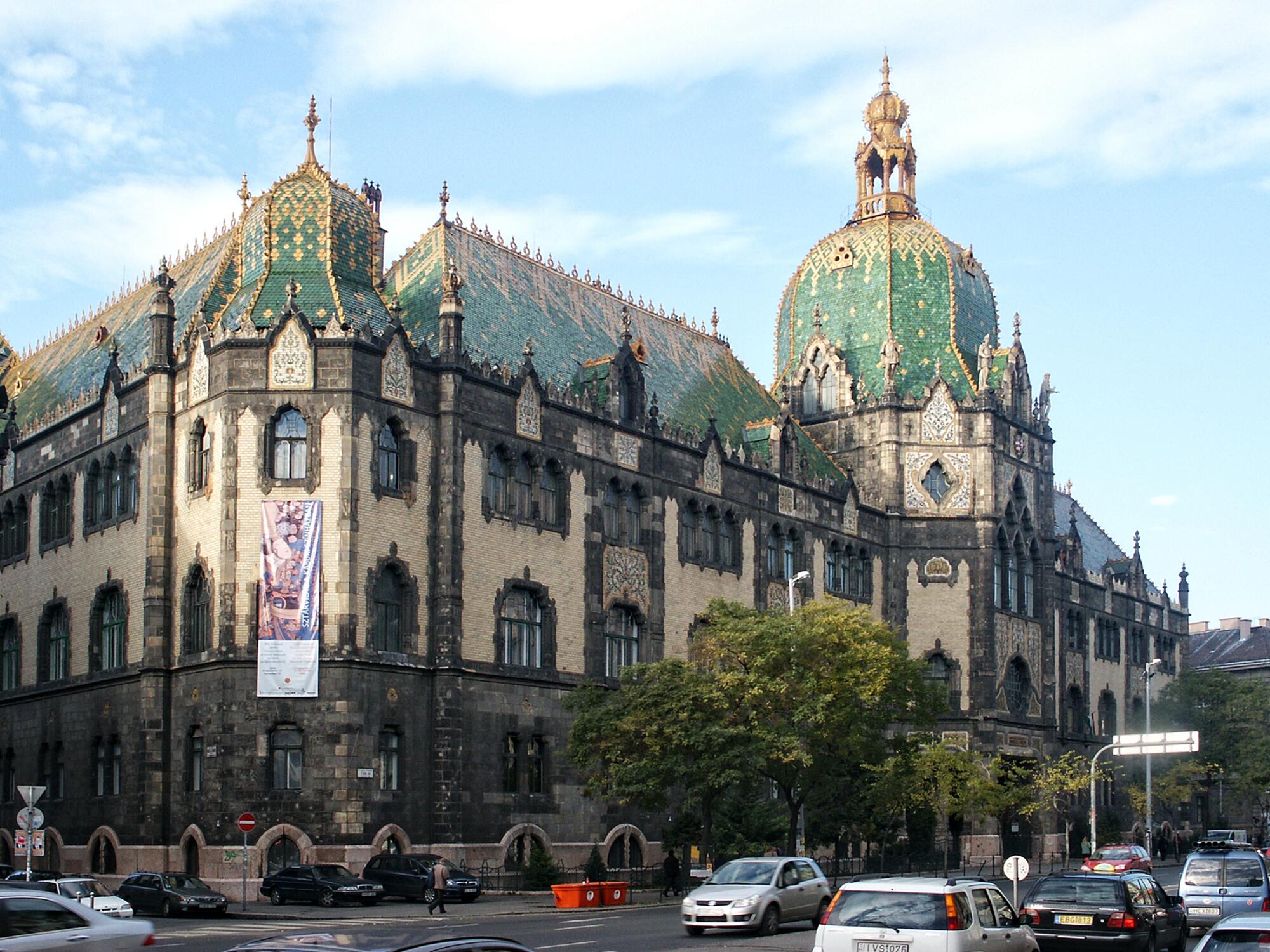
Ödön Lechner’s emblematic work, the Museum of AppliedArts (1893–1896), was preceded by an architectural competition, for whichLechner’s (and his partner’s, Gyula Pártos’s) entry bore the telling motto: “Keletremagyar” (“To the East, Hungarian”) The underlying idea of the Hungarians’eastern origin, coupled with the quest for an indigenous style, resulted inLechner’s highly original design. What particular impulses had led him to this?
The drawing instructor and amateur ethnographer JózsefHuszka exerted a significant influence on him. Huszka argued that Hungarianart, especially folk art, was closely related to the art of India and Persia.Lechner had the opportunity to observe Indian products and, what may have beenmore important, a reflection of Indian architecture in the Indian Pavilion atthe 1889 Paris Exposition. Its octagonal central hall displayed forms ofBuddhist architecture, the rows of exhibition bays those of Mughal architecture. This ideacaptured Ödön Lechner’s imagination, inspiring him to incorporate similarfeatures into his design.
Lechner also relied on studying “photographs andpublications”. He was familiar with Gustave Le Bon’s Les civilisationsde l’Inde (Paris, 1887). Other basic handbooks were readily available,including Julius Franz’s Die Baukunst des Islam (Darmstadt, 1887), andespecially James Fergusson’s highly popular History of Indian and EasternArchitecture (London, 1876). These works could supply additional visualreferences.
Contemporary Anglo-Indian architecture, which Lechnercalled “colonial architecture”, also fascinated him. Examples couldbe found in The Builder, Britain’s professional journal. It devoted twoarticles and several illustrations to the most prominent achievement of thiskind: the Victoria Terminus in Mumbai. Lechner probably gave more than apassing glance to the pictures of the building; its combination of Gothic andIndian architecture, especially the distinctive dome, was undoubtedly aninspiration to him.
In London, Lechner could not fail to visit the SouthKensington Museum (now the Victoria and Albert Museum) which contained anIndian Section with models and photographs illustrating the styles and forms ofIndian architecture, as well as colourful ceramic objects, such as vases andtiles. During his stay in London, it is conceivable that Leighton House and itstile-lined Arab Hall, which was open to visitors, were also on Lechner’sagenda.
In the 1870s and 1880s, several efforts were made inEurope, including Hungary, to emulate the glossy ceramics and floral patternscharacteristic of Oriental architecture. The use of ornamental tiles onbuilding façades, which was not typical of European architecture, ultimatelyoriginated in Persian architecture. Richly illustrated French albums provided awealth of examples of the use and design of ceramic elements. The Museum ofApplied Arts, designed by Lechner, set a trend for Hungarian Art Nouveauarchitecture with its Oriental forms, sovereign handling of spaces and details,polychromy, floral patterns and ceramic elements.