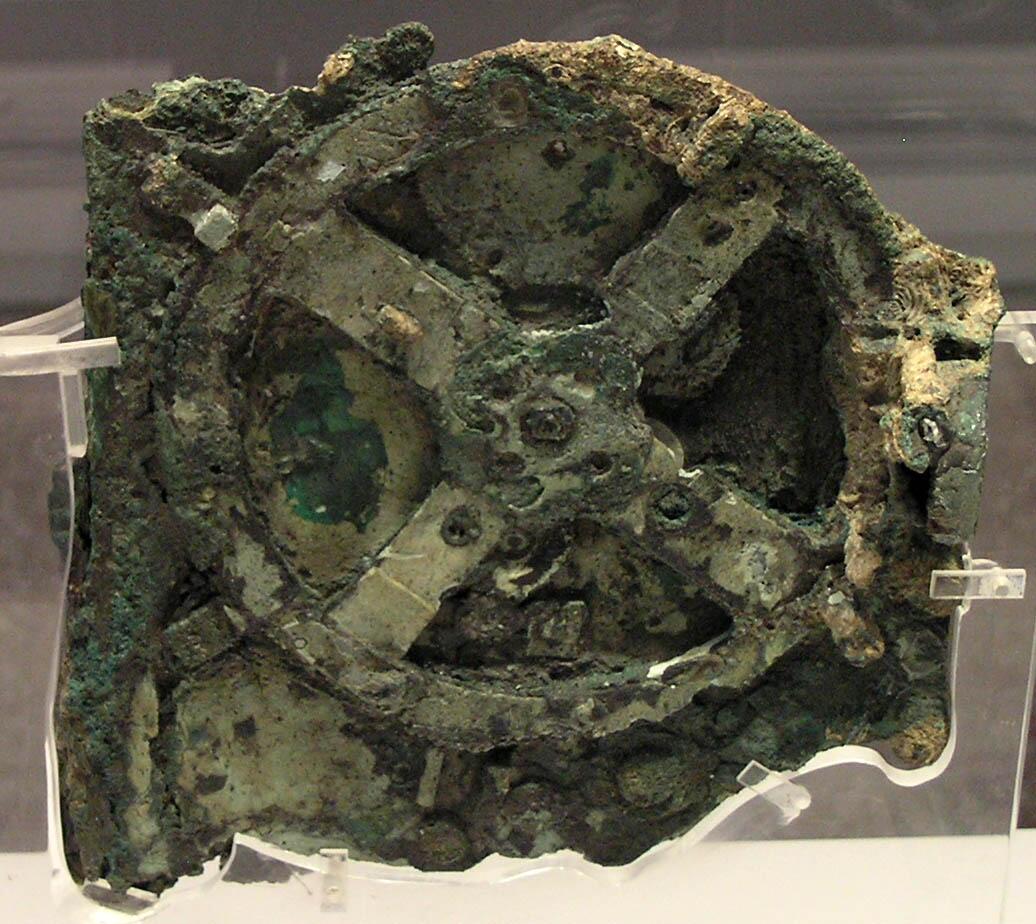
Marsyas (Wikimedia Commons), Re-use in accordance with the terms and conditions of the Creative Commons licence (CC BY 2.5), CC BY 2.5
The Antikythera Mechanism
- Not-identified creator
ca. 150-60 BCE
- National Archaelogical Museum, Athens, Greece
Creator(s)
Title(s)
Date of creation
ca. 150-60 BCE
Materials and techniques
Bronze Mechanism
Place of conservation
Acquisition details
Rights
External links
Sometime ca. 60 BCE a large cargo ship sank off the coast of the islet of Antikythera, which sits 30 km northwest of Crete and in antiquity was known as Aigilia. 2,000 years later around Greek Easter of 1900, Greek sponge divers from Syme discovered the shipwreck and months later reported it to the Greek authorities in Athens. From here an underwater archaeological expedition was organized and between November of 1900 and September of 1901 the shipwreck was salvaged and the goods were deposited in the Greek National Archaeological Museum in Athens where they still reside to this day.
Among the ship’s cargo were fine bronze and marble statues, including the stunning “Antikythera Ephebe”, fine glass and jewelry, everyday table pottery, amphorae (from Rhodes, Kos, Ephesos and probably also some from the Adriatic coast of Italy), a hoard of silver and bronze coins from Pergamon and Ephesos, and a finely-wrought geared bronze device now known to the world as the Antikythera Mechanism, so named after the island in whose waters it was found. So, what is the Antikythera Mechanism, where was it likely built, and for whom?